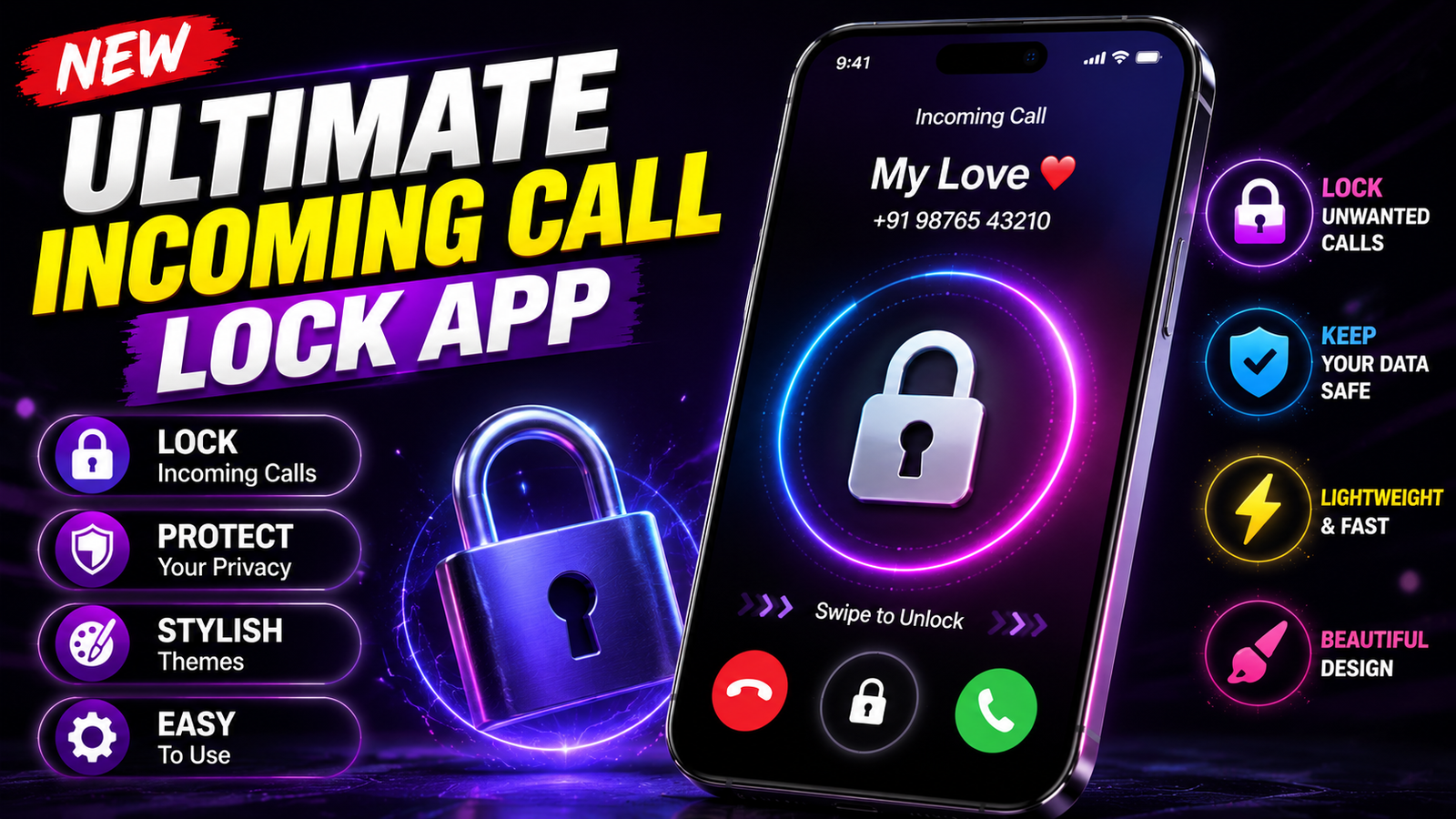
Hello friends, today we are going to try something useful with a topic that many people quietly worry about, call privacy. You might hand your phone to someone or place it on a table during a meeting, then an unexpected call pops up with full name and number on the screen. The New Ultimate Incoming Call Lock app promises to hide that moment and keep your incoming calls private.
This blog will walk you through what this app does, how to set it up correctly, and which settings you should check for better security. Instead of just listing features, we will look at real situations such as when you share your phone with family or use it for work calls. You will also see where the app can fall short and what to do about it.
If you are the type of user who often gives your phone to kids, coworkers, or friends, or you travel a lot and use ride sharing or public places, a call lock app can reduce awkward moments. This guide is aimed at Android users who want more control over who can see call details, without fully hiding behind airplane mode or silent mode. You do not need to be highly technical to follow the steps.
We will focus on the New Ultimate Incoming Call Lock app as a privacy tool that sits between your regular dialer and your lock screen. You will learn how it typically works with Android permissions, what to expect when a call comes in, and how to avoid common mistakes like granting too many permissions or installing from unsafe sources. By the end, you will know if this app suits your own calling habits and privacy needs.
Related Resource
The Download Link button above opens the Google Play page related to New Ultimate Incoming Call Lock App. Tap it to reach the app install page directly, so you can open the listing without searching again.
What the New Ultimate Incoming Call Lock App Actually Does
The New Ultimate Incoming Call Lock app is designed to cover your incoming call screen with a protected layer. When someone calls, instead of your caller name and number showing openly, the app can show a lock screen, pattern, PIN, or a generic message. Only after you unlock it can you see who is calling or choose to answer or reject.
Most versions of this kind of app rely on three things. Access to phone and call logs, overlay permission to show content on top of your normal call screen, and sometimes notification access so it can read caller info without replacing your dialer entirely. On many Android phones, this overlay is what hides the caller details from other people around you.
Real World Use Cases Where It Helps
Imagine you are in a shared office and your boss calls. Your phone is on your desk, screen facing up. Without a call lock, everyone nearby can read the caller name. With the New Ultimate Incoming Call Lock app active, they may only see a lock message or a blank protected screen until you pick it up and unlock it.
Another example is when you use your phone for both personal and work numbers through call forwarding or dual SIM. Maybe you do not want your children or partner to see the name of a client when a call comes in during family time. Call locking gives you an extra privacy layer without silencing genuine important calls.
How to Safely Install and Set Up the App
First, only install the New Ultimate Incoming Call Lock app from a trusted source such as Google Play Store. Avoid random APK sites, especially for any app that touches calls and permissions. Check recent user reviews and the last update date, because a call management app that is not updated for years can have glitches on newer Android versions.
During installation, the app will usually ask for permissions. Common ones are phone, contacts, draw over other apps, and sometimes modify system settings. Grant only what is required for the core function of locking incoming calls. If the app requests location or unrelated access, read the explanation carefully and consider denying it unless there is a clear reason.
Basic Setup Steps
- Open the app and complete the initial welcome wizard if it appears.
- Set a strong PIN or pattern that you can remember but others cannot guess easily.
- Enable incoming call lock for all calls or choose specific contacts if the app supports this filter.
- Test with a second phone or ask a friend to call you and observe the locked screen behavior.
Key Features and How They Work
Features vary slightly between updates and phone models, so treat this as a general list and check your version closely. The New Ultimate Incoming Call Lock app usually includes a main lock type, which can be PIN, pattern, sometimes fingerprint if the device supports it. Choose the option that you can unlock fast, especially when driving or in a rush.
Some builds include selective locking. This allows you to lock calls only from unknown numbers, or only from certain categories such as personal contacts. Others can hide caller ID while the phone rings, then show it only when unlocked. There may also be a stealth mode where the lock screen looks like a simple wallpaper or notification so people do not know you use a call lock app.
Comparison With Default Android Call Privacy Options
Many people ask whether they even need a separate app. Android already offers features like hidden notifications, lock screen content control, and do not disturb. The big difference is that the New Ultimate Incoming Call Lock app focuses on the call screen itself and not only on notifications.
| Feature | New Ultimate Incoming Call Lock app | Default Android settings |
|---|---|---|
| Hide caller details on ringing screen | Yes, using overlay lock screen | Limited, varies by brand and theme |
| PIN or pattern before viewing caller | Core function on most versions | Not standard on stock dialer |
| Per contact lock rules | Often available as selective lock | Rare, usually not built in |
| Battery and resource impact | Can use extra battery for overlay | Usually more efficient overall |
| Data control | Depends on developer and privacy policy | Under phone manufacturer and Google policy |
Case Study Style Scenario
Consider a small business owner who uses one phone number for both sales calls and private chats. They often pass the phone to staff to confirm addresses or read messages. Without extra protection, staff could see incoming calls from family or other private contacts. After setting up the New Ultimate Incoming Call Lock app, all incoming calls show a simple locked screen.
Staff can still see that the phone is ringing, so they can hand it over, but they cannot read the caller ID or phone number. The owner configures selective lock so that frequent supplier calls are shown normally, while family and unknown numbers always require the PIN. Over a few weeks, they notice fewer awkward questions about who is calling at late hours.
Common Mistakes and How to Avoid Them
A frequent mistake is turning on aggressive lock settings without testing. Some users then miss urgent calls because they fumble with the PIN or the overlay conflicts with the stock dialer. Always run several test calls and make adjustments for delay time, screen timeout, and lock style before you rely on it daily.
Another issue is ignoring battery optimization. On certain phones, if you do not remove the app from battery optimization, the system may kill the app in the background and the lock screen will not appear when a call arrives. Inside your Android settings, look for battery or power control and allow the New Ultimate Incoming Call Lock app to run without strict limits.
Privacy And Security Considerations
Any app that can read or cover your calls deserves extra scrutiny. Before using the New Ultimate Incoming Call Lock app, read the privacy policy on the store listing and in the app itself. Check whether the developer says anything about sending call data or contact details to remote servers. If the description is vague, take that as a sign to be cautious.
Also remember that this tool only protects what people see on the screen. Your mobile operator, carrier records, and messaging apps still keep their own logs. For higher privacy, combine call locking with strong phone lock, restricted lock screen notifications, and careful app permissions in general. You might also want to disable call previews in messaging or caller ID apps that show popups.
Conclusion
The New Ultimate Incoming Call Lock app can be a practical option if your main concern is people around you reading caller names and numbers on your phone screen. It creates a lock layer for incoming calls that most default dialer apps still do not offer in a simple way. When configured well, it adds privacy without forcing you to silence important calls.
At the same time, you should respect its limits. It depends heavily on Android permissions, battery rules, and your specific device brand. Treat it like any other security style tool, check reviews, test thoroughly, and keep backup options such as default lock screen settings. If you take a few minutes to tune it, you can reach a realistic balance between privacy, convenience, and reliability.
FAQ
Is the New Ultimate Incoming Call Lock app safe to use?
It can be safe if downloaded from a trusted store and the developer has a clear privacy policy. Always avoid unofficial download sites and limit permissions to what the app needs.
Will it block calls or just hide caller details?
Most versions only hide or lock the caller details and do not block the call itself. You can still answer or reject once you unlock the screen.
Does it work on all Android phones?
Behavior can vary by brand, Android version, and custom dialer. Some phones handle overlays differently, so you should test on your own device.
Can it hide missed calls from the call log?
Usually it does not modify the main call log. Missed calls still appear there, though some apps can mask caller names inside their own history view.
Will this app slow down my phone?
On recent phones the impact is often small, but constant overlays and background services can use extra battery and memory. If you notice lag, reduce features or try a lighter version.
Thank you for reading this guide on call privacy tools. If you found it useful, stay connected with our blog for more latest tech news, practical app guides, AI tools, and honest updates about Android privacy features.