WhatsApp is one of the most popular messaging applications in the world. Millions of people use it every day to communicate with friends, family members, colleagues, and customers. Over the years, WhatsApp has introduced several features to make conversations more interesting, personal, and interactive. From text messages and voice notes to emojis, GIFs, and stickers, the platform continues to improve the way people communicate.
One of the interesting ways to make digital conversations more expressive is through audio-based stickers. Instead of relying only on written messages or traditional visual stickers, audio stickers allow users to communicate using short sound clips, reactions, and audio expressions.
Imagine sending a funny laugh when your friend shares a joke, a surprised sound when someone tells you unexpected news, or a cheerful greeting without recording a new voice message every time. This is the idea behind audio stickers.
Audio stickers can make conversations more entertaining and help users express emotions in a different way. They also offer an interesting alternative to repeatedly typing the same responses.
In this article, we will explore what WhatsApp audio stickers are, how they work, their possible uses, benefits, limitations, and how audio-based messaging could influence the future of online communication.
What Are WhatsApp Audio Stickers?
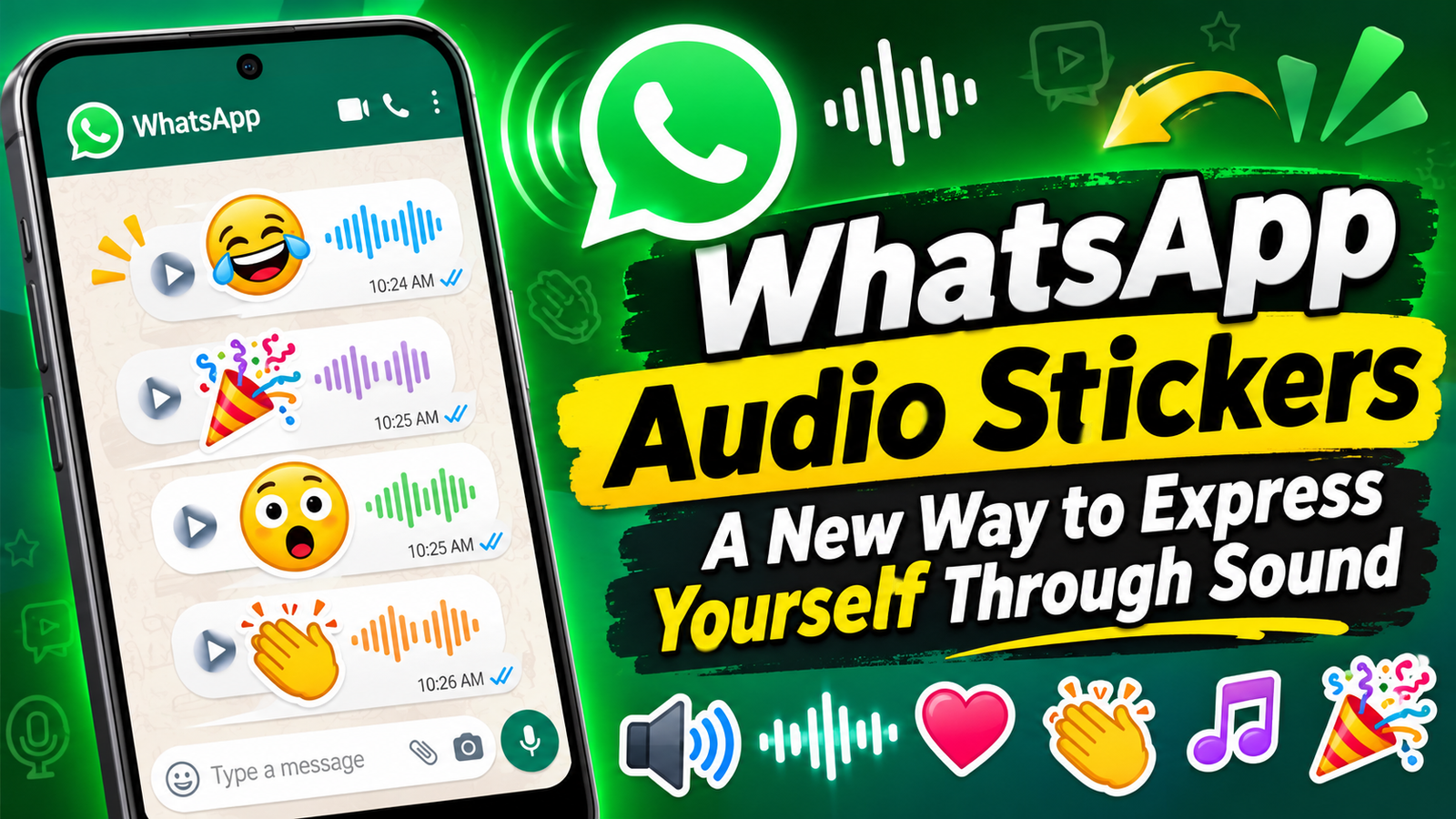
Audio stickers are short sound-based expressions designed to make conversations more interactive. Similar to regular WhatsApp stickers, which use images and animations to communicate emotions, audio stickers use sound to express a particular feeling or reaction.
For example, a traditional sticker might show a laughing face. An audio sticker could communicate the same emotion through a short laughing sound.
Audio stickers can be useful for expressing different reactions, including:
- Laughter and happiness.
- Surprise and excitement.
- Sadness and sympathy.
- Congratulations and celebrations.
- Greetings and good wishes.
- Funny reactions and entertainment.
- Short conversational responses.
The main concept is simple: instead of sending a complete voice recording, users can share a short sound that communicates their reaction.
Important: Audio stickers should not be confused with WhatsApp voice messages or standard sticker packs. The availability of a dedicated native audio-sticker feature may vary. Some audio-based reactions can instead be shared through voice notes, audio clips, or third-party sticker tools.
How Audio-Based Stickers Can Change Conversations
Traditional messaging usually depends on text. Although text is convenient, it does not always communicate emotions accurately.
For example, if someone sends a funny message, replying with the word “Haha” may not feel as expressive as sending an actual laughing sound.
Audio-based reactions provide another way to communicate emotions.
Consider these situations:
- Your friend shares a funny meme. You respond with a short laughing sound.
- Someone announces good news. You send a cheerful celebration sound.
- A family member wishes you on your birthday. You reply with a warm greeting.
- Your friend surprises you with unexpected information. You send a short surprised reaction.
- Someone tells you a joke. You respond with an entertaining sound effect.
These small interactions can make digital conversations feel more natural and personal.
Audio Stickers vs Traditional WhatsApp Stickers
WhatsApp already supports different types of stickers, including static images and animated stickers. Audio-based expressions offer a different communication experience.
1. Traditional Image Stickers
Image stickers communicate through pictures, characters, expressions, and illustrations.
For example, users can send laughing faces, cartoon characters, thumbs-up symbols, and funny reactions.
2. Animated Stickers
Animated stickers add movement to visual expressions. They can make reactions more entertaining than static images.
3. Audio-Based Expressions
Audio-based expressions communicate through sound. They can include laughter, applause, greetings, short reactions, and other sound effects.
Each format has its own advantages. Image stickers are easy to understand at a glance, animated stickers add movement, and audio expressions add a sound dimension to conversations.
Why Are Audio Stickers Interesting?
There are several reasons why audio-based messaging is an interesting concept.
1. More Expressive Communication
Sometimes words cannot fully explain how we feel. A short sound can communicate excitement, happiness, surprise, or amusement.
2. Faster Responses
Users often send the same reactions repeatedly. Having access to ready-made audio reactions could make replying faster.
3. More Entertainment
Funny sound effects and creative reactions can make group conversations more enjoyable.
4. Personal Communication
Users can potentially create their own audio clips using their voices. This adds a personal touch that ordinary image stickers cannot provide.
5. Creative Possibilities
Audio-based reactions can include different voices, sound effects, music-free sound effects, and short conversational expressions.
Different Types of Audio Stickers
Here are some examples of audio reactions that users may find useful.
Funny Audio Reactions
Funny sounds can make casual conversations entertaining.
Examples include:
- Laughing sounds.
- Cartoon-style reactions.
- Funny surprise sounds.
- Playful expressions.
- Short comedy sound effects.
Emotional Audio Reactions
These sounds can help users express feelings without typing long messages.
Examples include:
- A comforting response.
- A happy reaction.
- A disappointed sound.
- A surprised reaction.
- An emotional expression.
Celebration Audio Reactions
Celebration sounds are useful for special occasions.
Examples include:
- Birthday greetings.
- Congratulations.
- Applause.
- Party sound effects.
- Achievement celebrations.
Daily Conversation Reactions
Some audio expressions can be useful in everyday chats.
Examples include:
- Hello.
- Good morning.
- Thank you.
- Welcome.
- Goodbye.
How to Share Audio Clips on WhatsApp
Even if a dedicated audio-sticker feature is unavailable on your WhatsApp version, you can share short audio clips through supported messaging features.
Here is a general method:
- Open WhatsApp on your smartphone.
- Open an individual chat or group conversation.
- Tap the attachment option or use the available audio-sharing method.
- Select an existing audio file from your device, if supported.
- Choose the audio clip you want to share.
- Send it to the conversation.
You can also record and send a voice message directly from a WhatsApp chat.
The exact options may differ depending on your device, WhatsApp version, and operating system.
How to Create Your Own Audio Reactions
Creating personalized audio reactions can be a fun way to make conversations unique.
You can follow these general steps:
Step 1: Choose a Sound
Think about the type of reaction you want to create. It could be laughter, applause, a greeting, or a funny expression.
Step 2: Record Your Voice
Use your smartphone’s voice recorder to record a short sound.
Step 3: Edit the Audio
If necessary, remove unnecessary silence and adjust the audio volume using an audio-editing application.
Step 4: Save the Audio
Save your finished recording in a supported audio format.
Step 5: Share It
Share the audio file through WhatsApp using the available audio-sharing options.
Remember that sending an audio file does not automatically convert it into a native WhatsApp sticker. That depends on whether WhatsApp or a supported third-party tool provides that functionality.
WhatsApp Audio Stickers for Group Chats
Group chats are one of the places where audio reactions could become especially entertaining.
Friends and family members often share memes, jokes, videos, photographs, and personal updates. Audio reactions can make these conversations more interactive.
For example:
- When someone shares a funny video, another member can respond with laughter.
- When someone achieves something important, group members can send congratulatory sounds.
- During birthday celebrations, users can share greetings.
- When someone makes a surprising announcement, members can respond with funny reactions.
Audio reactions can help create a more lively group-chat experience.
However, users should consider the preferences of other group members and avoid repeatedly sending loud or unnecessary sounds.
Audio Stickers and Privacy
Privacy is important whenever users share audio content online.
Voice recordings can contain personal information, background conversations, or identifiable voices.
Here are some precautions:
- Avoid recording private conversations without permission.
- Do not share someone else’s voice without their consent.
- Avoid sending confidential information through public or large groups.
- Be careful when downloading audio files from unknown sources.
- Use trusted applications when recording or editing audio.
- Check the permissions requested by third-party sticker applications.
Users should also be careful with audio clips that contain copyrighted music or other protected recordings.
Are Audio Stickers Better Than Voice Messages?
Audio stickers and voice messages serve different purposes.
Voice messages are useful when users want to explain something, share detailed information, or communicate a longer message.
Audio reactions are more suitable for short expressions and quick responses.
For example, sending a complete voice message to say “Congratulations!” may be unnecessary when a short celebratory sound can communicate the same feeling.
On the other hand, if you want to explain something in detail, a voice message is much more practical.
Therefore, both formats can complement each other rather than replace one another.
Possible Limitations of Audio Stickers
Although audio-based reactions offer interesting possibilities, they also have some limitations.
1. Sound Is Not Always Convenient
Users may not be able to play audio in public places, offices, classrooms, or quiet environments.
2. Internet Connectivity
Downloading or sharing audio files may require an internet connection.
3. Storage Space
Large audio files can consume unnecessary storage space, especially when shared repeatedly in group chats.
4. Compatibility
Different devices and operating systems may support different audio formats and features.
5. Privacy Concerns
Audio recordings can reveal personal details, so users should share them carefully.
6. Feature Availability
A dedicated native audio-sticker feature may not be available to every WhatsApp user. Users should check official WhatsApp updates rather than assuming that every audio-sharing option is an audio sticker.
The Future of Audio-Based Messaging
Messaging applications are constantly exploring new ways to improve communication.
In the future, audio-based messaging could become more advanced through features such as:
- Custom voice reactions.
- Personalized sound collections.
- Improved audio editing.
- Short animated sound reactions.
- Better audio organization.
- More creative communication tools.
- Easier sharing of short sound clips.
These are possibilities rather than confirmed WhatsApp features.
As messaging platforms continue to evolve, users may get more ways to communicate beyond traditional text, images, and voice messages.
Frequently Asked Questions (FAQs)
1. What are WhatsApp audio stickers?
Audio stickers generally refer to short sound-based reactions used in conversations. They are different from traditional image and animated stickers.
2. Can I send audio stickers on WhatsApp?
You can share voice messages and supported audio files through WhatsApp. However, these should not automatically be considered native audio stickers.
3. Can I create my own audio reactions?
Yes. You can record your voice, edit the recording, and share it as an audio file through supported WhatsApp options.
4. Are audio stickers the same as voice messages?
No. Voice messages are usually recorded conversational messages, while audio reactions are intended to be short sound expressions.
5. Do audio stickers work on Android and iPhone?
Audio files and voice messages are supported on both Android and iPhone. Specific sticker-related functionality depends on the application or tool being used.
6. Do I need a third-party application?
You do not need a third-party application to send ordinary WhatsApp voice messages. However, additional tools may be required for certain audio-editing or custom-sticker workflows.
7. Can I use audio reactions in WhatsApp groups?
You can share supported audio files and voice messages in group chats, subject to WhatsApp’s available features and group settings.
8. Do audio files take up storage space?
Yes. Downloaded and received audio files can use storage space on your device.
9. Are audio reactions safe?
They can be safe when shared responsibly. Avoid downloading unknown files and sharing private recordings without permission.
10. Will WhatsApp introduce more audio features?
WhatsApp regularly updates its messaging experience. Future audio features are possible, but specific developments should be confirmed through official announcements.
Conclusion
WhatsApp audio stickers represent an interesting idea for making digital conversations more expressive and entertaining. While traditional stickers communicate through images and animations, audio-based reactions add another dimension through sound.
From funny reactions and celebrations to greetings and personalized voice expressions, short audio clips can make everyday conversations more enjoyable.
Although users can already share voice messages and audio files through WhatsApp, a dedicated native audio-sticker experience is a separate feature and should not be confused with ordinary audio sharing.
As messaging applications continue to evolve, sound-based communication could become an increasingly interesting part of the way people interact online.